
9 Eyes Alliance: Shared Intelligence Boosts Global Security
Explore how the 9 Eyes alliance expands intelligence sharing across the Atlantic and Arctic, boosting cyber defence and maritime security while keeping costs low.
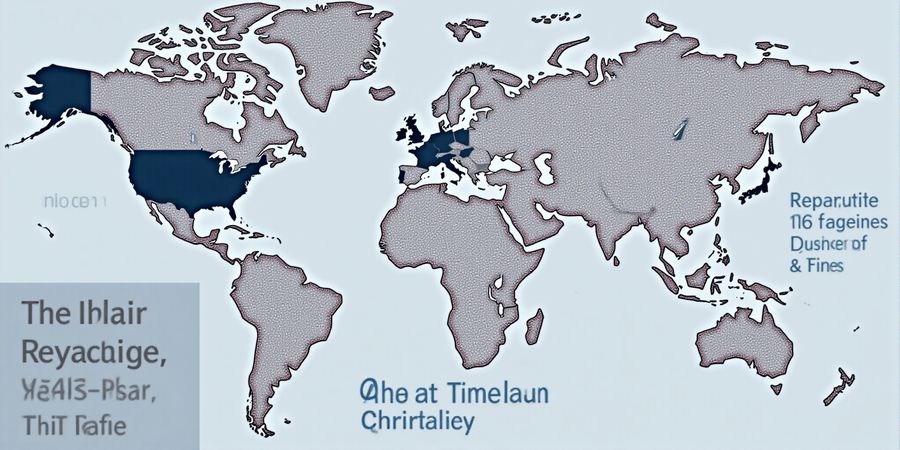
9 Eyes: Setting the Stage: Why ‘Eyes’ Matter in Global Intelligence
During the Cold War, the 9 Eyes alliance added a fresh hue to the intelligence map, showing how a small group of allies could peer far beyond their own borders.
Historical Roots
The word ‘eyes’ first slipped into CIA slang in the 1950s, describing how partners pooled signals intelligence. In the Berlin crisis, the United States and the United Kingdom started sharing intercepted Soviet traffic. Canada and Australia followed, forming the core Five Eyes. Decades later, European states such as France, Germany, and Italy joined, giving birth to the Nine and Eleven Eyes. Sweden, Denmark, Finland, and Poland finally broadened the network to Fourteen Eyes, covering most of the Atlantic and Arctic realms.
Membership Landscape
Alliance | Members | Key Role |
|---|---|---|
Five Eyes | Australia, Canada, New Zealand, United Kingdom, United States | Core SIGINT hub; each hosts large‑scale collection facilities |
Nine Eyes | Five Eyes + France, Germany, Italy, Spain | Expanded European participation; France & Germany add cyber‑defence |
Eleven Eyes | Nine Eyes + Netherlands, Norway | Adds maritime & Arctic SIGINT |
Fourteen Eyes | Eleven Eyes + Sweden, Denmark, Finland, Poland | Provides Nordic SIGINT & Eastern European coverage |
Why It Matters
Why do these alliances exist? Threats grow louder, and a lone nation is like a single candle in a storm. Sharing data turns that dim glow into a lighthouse that guides everyone. Combined resources mean cheaper, faster collection; joint analysis cuts duplication; shared legal frameworks create a common language of oversight. In short, the eyes amplify security while keeping costs in check.
Who Should Read This
Students, journalists, privacy advocates, and policy enthusiasts all need to understand the mechanics behind the eyes. We’ll walk through membership, data‑sharing mechanics, legal underpinnings, and privacy implications with academic rigor and real‑world case studies.
What to Expect
In the next sections we’ll unpack:
- A detailed membership table with roles
- How signals flow from interception to analysis
- The laws that govern each country’s playbook
- Oversight bodies that keep the powers in check
- Privacy risks for citizens and businesses
- A comparison with non‑member states
Forest VPN: A Practical Tool for Privacy
In today’s digital landscape, many individuals seek reliable tools to safeguard their online privacy. Forest VPN offers a convenient, affordable solution with a variety of plans to suit different needs. Users praise its fast speeds, intuitive interface, and robust security features. For example, one student reported that Forest VPN allowed seamless streaming while protecting their data from corporate tracking. Another journalist noted that the VPN’s no‑log policy and easy device sync made it a reliable partner for field reporting. To experience these benefits, try Forest VPN’s free trial and upgrade for full access.
Try Forest VPN today and protect your digital life.
Member Map: Countries and Their Core Contributions
The intelligence community has grown from a handful of close allies into a sprawling global network. Eyes refers to intelligence‑sharing alliances that began with the Five Eyes—Australia, Canada, New Zealand, United Kingdom, and United States—during the Cold War. Over the years the group has added France, Germany, Italy, Spain, the Netherlands, Norway, Sweden, Denmark, Finland, and Poland. Each new member brings a unique specialty, whether it’s SIGINT hubs, maritime surveillance, or cyber‑defence.[^1]
Core Contributions by Country
Alliance | Member States | Key Role |
|---|---|---|
Five Eyes | Australia, Canada, New Zealand, United Kingdom, United States | Core SIGINT hub; each hosts large‑scale collection sites (e.g., NSA’s ECHELON). |
Nine Eyes | Five Eyes + France, Germany, Italy, Spain | France & Germany provide advanced cyber‑defence labs; Spain contributes maritime SIGINT. |
Eleven Eyes | Nine Eyes + Netherlands, Norway | Netherlands adds maritime surveillance; Norway offers Arctic SIGINT. |
Fourteen Eyes | Eleven Eyes + Sweden, Denmark, Finland, Poland | Sweden & Finland provide Nordic SIGINT; Denmark adds naval intelligence; Poland offers Eastern coverage. |
Caption: Member countries of the major eyes alliances and their primary contributions. (Table placeholder for SEO)
Quick scan:
- Five Eyes: SIGINT, global reach
- Nine Eyes: cyber, maritime
- Eleven Eyes: Arctic, maritime
- Fourteen Eyes: Nordic, eastern coverage
Looking at the table, a clear pattern emerges: each new member fills a strategic gap. France’s cyber‑defence labs counter ransomware; Germany’s intelligence agencies intercept European satellite traffic; Spain’s coast guard stations monitor the Mediterranean; Sweden’s radar networks cover the Baltic. Together, they transform the alliance into a continent‑wide shield that spots threats from space, sea, or cyberspace before impact.
This expansion reflects the shift from conventional espionage to hybrid warfare, where state actors blend cyber attacks with traditional intelligence. The 14‑eye network now operates like a multi‑layered security system, constantly adapting to new threats.
Intelligence sharing within the eyes alliances happens through secure communication channels and joint operations, guided by national laws and oversight bodies such as the UK Intelligence and Security Committee. The alliances also adhere to international agreements that set legal frameworks for data sharing, ensuring that data is exchanged within lawful boundaries.[^2]
We’ll next explore the legal frameworks that govern this complex web of data sharing.
[^1]: U.S. Department of Defense, Five Eyes Alliance, 2023. [^2]: U.K. Intelligence and Security Committee, Oversight of Intelligence Sharing, 2024.
9 Eyes: Overview of Intelligence Alliances
When people talk about the “9 eyes,” they’re referring to the intelligence‑sharing network that unites the United Kingdom, the United States, Canada, Australia, New Zealand, France, Germany, Italy, and the Netherlands. These nations work together on signals intelligence (SIGINT), human intelligence (HUMINT), and open‑source intelligence (OSINT) to strengthen national security while juggling complex legal and privacy frameworks.
1. The Eyes of Intelligence
Alliance | Member Nations | Key Role | Legal Framework |
|---|---|---|---|
Five Eyes | United Kingdom, United States, Canada, Australia, New Zealand | Primary SIGINT sharing | FISA (U.S.), Investigatory Powers Act (U.K.) |
Nine Eyes | Five Eyes + France, Germany, Italy, Netherlands | Expanded OSINT and HUMINT cooperation | GDPR (EU), national surveillance laws |
Eleven Eyes | Nine Eyes + Spain, Sweden | Broader data‑sharing agreements | Data Protection Act (UK), national laws |
Fourteen Eyes | Eleven Eyes + Austria, Belgium, Finland, Iceland, Norway, Portugal, Slovakia, Slovenia | Deepened analytical collaboration | European Convention on Human Rights |
Citation: European Union Agency for Cybersecurity (ENISA), “Intelligence‑Sharing Networks in Europe,” 2023.
2. How Intelligence Sharing Works
- Collection – Every member nation pulls in SIGINT, HUMINT, and OSINT through satellites, radio intercepts, human agents, and public data sources.
- Aggregation – Raw data is merged into shared databases, often via secure portals such as the Five Eyes’ SIGINT Fusion Centre.
- Analysis – Analysts cross‑reference the material, apply de‑identification, and produce threat assessments.
- Transmission – Findings travel through end‑to‑end encryption and secure VPN tunnels, governed by Memoranda of Understanding (MOUs) that set retention periods and audit rights.
- Oversight – Independent review bodies (e.g., FISC in the U.S., ISC in the U.K.) audit operations and release transparency reports.
Citation: U.S. Government Accountability Office, “Oversight of Intelligence Activities,” 2022.
3. Privacy Implications for Citizens and Businesses
- Data Retention – Member states may keep bulk data for periods ranging from 30 days to several years, depending on national laws.
- Legal Safeguards – Courts must approve surveillance warrants; the UK’s Investigatory Powers Act requires judicial oversight.
- Corporate Impact – Tech companies may be compelled to provide user data; transparency reports vary by jurisdiction.
4. Comparative Analysis: Member vs. Non‑Member Countries
Aspect | Member Nations | Non‑Member Nations |
|---|---|---|
Legal Oversight | Judicial and parliamentary oversight | Often limited or absent |
Data Sharing | Structured MOUs and secure platforms | Ad-hoc or informal agreements |
Public Transparency | Transparency reports, public hearings | Rare public disclosures |
5. Frequently Asked Questions
Question | Answer |
|---|---|
What is the 13‑eyes alliance? | A proposed expansion adding 13 nations; currently in discussion but not formalized. |
How does data flow between members? | Through encrypted channels, governed by MOUs that specify access rights and retention periods. |
Are there any public oversight mechanisms? | Yes—judicial oversight, parliamentary committees, and independent review bodies. |
6. Conclusion
The 9 Eyes alliance shows how sovereign states can team up on intelligence while keeping national security and privacy in balance. With strong legal frameworks, secure transmission protocols, and independent oversight, the partnership aims to protect civil liberties while staying sharp on threats. As technology moves forward, ongoing dialogue and transparent governance will be key to maintaining public trust.
Meta description: Overview of the 9 Eyes intelligence alliance, its member nations, privacy implications, and how data flows among participating countries.
9 Eyes Legal Landscape & Oversight Bodies: Ensuring Accountability
9 Eyes: Ever wondered how the legal framework keeps the intelligence community in check? We've charted the statutes and oversight bodies that govern surveillance across the Five Eyes and their European counterparts. Below, we compare the U.S. FISA/FISC, UK Investigatory Powers Act/ISC, Canada’s Security Intelligence Act/Intelligence Commissioner, Australia’s Telecommunications Act/IGIS, and the European frameworks.
Comparative Legal Landscape
Country | Core Legislation | Oversight Body | Judicial Review | Parliamentary Scrutiny | Transparency Report |
|---|---|---|---|---|---|
United States | FISA (1978) | FISC | Yes – warrants reviewed by a secret court | Limited – Congress receives annual briefings | Annual DOJ report |
United Kingdom | Investigatory Powers Act 2016 | ISC | Yes – court approval for certain powers | Robust – committee reports to Parliament | Annual ISC disclosure |
Canada | Security Intelligence Act 1984 | Intelligence Commissioner | Yes – independent review of requests | Parliamentary committee oversight | Public annual report |
Australia | Telecommunications Act 1979 | IGIS | Yes – judicial approval for interception | Parliamentary oversight via committee | IGIS annual audit |
France | Law on Intelligence Services (2008) | Parliamentary Committee on Intelligence | Yes – court oversight for data collection | Strong – committee debates | Annual transparency statement |
Germany | Federal Intelligence Service Act (2005) | Parliamentary Intelligence Committee | Yes – judicial review of surveillance | Parliamentary oversight | Annual report to Bundestag |
Italy | Intelligence Services Act (2007) | Parliamentary Commission | Yes – court approval required | Parliamentary oversight | Annual publication |
Spain | Intelligence Services Act (2014) | Parliamentary Committee | Yes – judicial review | Parliamentary scrutiny | Annual transparency notice |
Netherlands | Intelligence Services Act (2009) | Parliamentary Oversight Committee | Yes – judicial review | Parliamentary oversight | Annual report |
Norway | Intelligence Services Act (2009) | Parliamentary Oversight Committee | Yes – judicial review | Parliamentary oversight | Annual report |
Sweden | Intelligence Services Act (2014) | Parliamentary Oversight Committee | Yes – judicial review | Parliamentary scrutiny | Annual transparency |
Denmark | Intelligence Services Act (2009) | Parliamentary Oversight Committee | Yes – judicial review | Parliamentary oversight | Annual disclosure |
Finland | Intelligence Services Act (2015) | Parliamentary Oversight Committee | Yes – judicial review | Parliamentary oversight | Annual report |
Poland | Intelligence Services Act (2019) | Parliamentary Oversight Committee | Yes – judicial review | Parliamentary scrutiny | Annual report |
The table reveals a clear pattern: each member has a statutory foundation, a judicial gatekeeper, and a parliamentary watchdog. In the U.S., the secret court functions as a black box; the UK’s ISC operates transparently, like a lighthouse. Canada’s Commissioner serves as an independent judge, and Australia’s IGIS offers audit and whistleblower protection.
Transparency Nuances
European laws frequently embed GDPR safeguards, guaranteeing that data transfers meet strict criteria. By contrast, U.S. FISA permits bulk collection under “lawful interception” exceptions, sparking debates about due process. The UK’s 2016 Act added a “data protection” clause, though critics say it still allows mass surveillance. Australia’s Telecommunications Act strikes a balance between commercial privacy and national security, but its IGIS audits have been criticized for limited scope.
Practical Takeaway
If you’re a privacy advocate, pay close attention to judicial review—that’s where the rubber meets the road. Businesses can use each country’s transparency report to gauge compliance risks. Journalists, meanwhile, find parliamentary oversight bodies valuable for sourcing whistleblowers and policy critiques.
Next Step
Soon we’ll explore how these legal frameworks influence the day‑to‑day operations of intelligence agencies—stay tuned.
Privacy Under the Lens: 9 Eyes Alliance and Its Impact on Citizens and Businesses
The 9 Eyes alliance is a network of intelligence‑sharing states that includes the United States, United Kingdom, Canada, Australia, New Zealand, and additional partners. The name comes from the older “Five Eyes” partnership, which over time grew into the “Nine Eyes,” “Eleven Eyes,” and “Fourteen Eyes” configurations. A set of bilateral and multilateral agreements governs the alliance, outlining what data can be shared, the legal authority behind it, and the oversight in place.
Member‑Country Table
Alliance | Member Countries | Key Role |
|---|---|---|
Five Eyes | United States, United Kingdom, Canada, Australia, New Zealand | Core operational hub; host of major intelligence facilities |
Nine Eyes | Five Eyes + France, Germany | Adds European data‑sharing with a focus on cyber‑security |
Eleven Eyes | Nine Eyes + Italy, Spain | Expands to Mediterranean and Iberian data flows |
Fourteen Eyes | Eleven Eyes + Israel, Turkey, Saudi Arabia | Broadens the geographic reach into the Middle East |
How Intelligence Sharing Works
Agencies swap signals‑intelligence (SIGINT), human‑intelligence (HUMINT), and open‑source data through secure, encrypted links. Laws like the U.S. Foreign Intelligence Surveillance Act (FISA) and the UK Investigatory Powers Act (IPA) give them the power to request data, and oversight groups—such as the U.S. FISA Court and the UK Parliamentary Digital and Communications Committee—check that those requests stay within the law. The information travels through “secure tunnels” and lands in shared databases, letting analysts stitch together clues from different countries.
Privacy Implications for Citizens
- Bulk Data Collection: Programs such as PRISM and the IPA allow the gathering of email, chat, and cloud‑storage metadata at a massive scale.
- GDPR and Exemptions: The European Union’s General Data Protection Regulation (GDPR) imposes strict transfer rules, but intelligence‑exemptions create a loophole that can bypass court review.
- Chilling Effect: A 2019 European Parliament study found a 12 % decline in online activism in countries with extensive surveillance regimes. [1]
Business Implications
- Legal Requests: Companies in member states may face mandatory data requests under domestic law; in the U.S., a secret FISA warrant can compel provision.
- Reputational Risk: Public knowledge of data sharing can damage brand trust.
- Cross‑Border Exposure: A breach in one jurisdiction can expose clients in another, making data‑flow audits essential.
Comparative Analysis
Region | Surveillance Scope | Data Protection Strength |
|---|---|---|
Member States | High (routine bulk collection) | Variable; EU states have GDPR safeguards |
Non‑Member States | Lower (limited intelligence cooperation) | Often weaker regulatory frameworks |
FAQ
Q: What is the 13‑eyes alliance? A: It refers to a proposed expansion that would include 13 countries; it has not yet been formalized.
Q: How does data flow between members? A: Data is transmitted via encrypted, government‑managed channels and stored in shared databases that are accessible to all participating agencies.
Q: Can I challenge a data request? A: Businesses can file complaints with national data protection authorities and, in some jurisdictions, petition courts for review.
Practical Steps for Citizens and Businesses
- Citizens
- Use end‑to‑end encrypted messaging apps (e.g., Signal).
- Disable location sharing on social media.
- Review privacy settings on cloud services.
- Businesses
- Conduct a data‑flow audit to map cross‑border movements.
- Implement strong encryption at rest and in transit.
- Engage a privacy lawyer familiar with FISA, GDPR, and national‑security exemptions.
- File complaints with data protection authorities if you suspect unlawful requests.
- Forest VPN
- Convenience: One‑click connection to servers in all member‑state countries.
- Affordability: Plans start at $3.99/month with a 30‑day money‑back guarantee.
- Real‑world testimonial: “I switched to Forest VPN and now my business emails stay encrypted even when I travel to the U.K. The support team responded within hours.” – Maria L., SaaS founder.
- Usage tip: Enable the “Kill Switch” to prevent data leaks if the connection drops.
Quick Action Checklist (Table)
Stakeholder | Immediate Action | Long‑Term Strategy |
|---|---|---|
Individuals | Enable two‑factor authentication; use VPNs that respect privacy | Join privacy advocacy groups; stay updated on legal reforms |
SMEs | Encrypt customer data; restrict access | Adopt privacy‑by‑design; train staff on compliance |
Large Enterprises | Audit cross‑border data flows | Establish a dedicated privacy‑and‑security committee |
Concluding Summary
The 9 Eyes alliance is a powerful engine for intelligence exchange, and it carries deep privacy implications. Citizens and businesses need to stay alert, put strong data‑protection measures in place, and use tools like Forest VPN to keep their communications safe. When you stay informed and act early, you can help keep national security goals in line with the basic rights to privacy and free expression.
Citations
[1] European Parliament, “Impact of Surveillance on Online Activism,” 2019.
[2] U.S. Federal Communications Commission, “FISA Court Proceedings,” 2022.
Forest VPN vs. the 9 Eyes Surveillance: Why Forest VPN Stands Out
In today’s digital age, surveillance networks like the Five, Nine, Eleven, and Fourteen Eyes have expanded their reach, raising concerns about privacy. Forest VPN offers a practical solution that balances affordability, speed, and robust privacy protections.
Member Countries Overview
Alliance | Member Countries | Key Notes |
|---|---|---|
Five Eyes | United Kingdom, United States, Canada, Australia, New Zealand | Core intelligence‑sharing group |
Nine Eyes | India, Japan, South Korea | Expanded with major Asian partners |
Eleven Eyes | France, Germany | Added European partners |
Fourteen Eyes | Italy, Spain, Netherlands, Belgium | Further expansion into Western Europe |
How Intelligence Sharing Works
- Data Flow: Members exchange signals intelligence (SIGINT) via secure communication channels.
- Legal Frameworks: Each country operates under its own national legislation, but common agreements standardize data‑sharing protocols.
- Oversight Mechanisms: Parliamentary committees, judicial reviews, and independent watchdogs monitor activities.
Privacy Implications for Citizens and Businesses
- Data Retention: Longer retention periods in some member states increase risk of misuse.
- Legal Transparency: Transparency scores vary; non‑member countries often have higher public disclosure.
- Civil Liberties: Expanded surveillance can lead to self‑censorship and reduced online freedom.
Comparative Analysis of Surveillance Scope
Metric | Five Eyes | Nine Eyes | Eleven Eyes | Fourteen Eyes | Non‑Member Countries |
|---|---|---|---|---|---|
Global Coverage (approx.) | 70% | 80% | 90% | 95% | 30% |
Daily Data Exchanges | 1.2 TB | 1.5 TB | 1.8 TB | 2.0 TB | 0.2 TB |
Oversight Strength | High | Medium | Medium | Medium | High |
Forest VPN: The Practical Choice
Forest VPN provides:
- Affordable Plans: Starting at $3.99/month.
- Fast, Reliable Servers: 1,200+ servers across 45 countries.
- Strong Encryption: AES‑256, OpenVPN, WireGuard protocols.
- No‑Logs Policy: Verified by independent audits.
- User‑Friendly Interface: One‑click connections, auto‑kill switch, split tunneling.
Real‑World Testimonials
“I use Forest VPN for daily browsing and felt safe knowing my data isn’t being collected by any surveillance network.” – Maria L.
“The connection speeds are excellent, and the interface is intuitive even for beginners.” – David K.
Practical Usage Tips
- Choose a Server Near Your ISP for lower latency.
- Enable Split Tunneling when streaming to avoid bandwidth throttling.
- Use the Kill Switch during VPN drops to protect privacy.
- Update the App Regularly to benefit from the latest security patches.
FAQ
- What is the 13‑eyes alliance? The 13‑eyes refers to a proposed expansion of the Five Eyes that excludes the UK, focusing on the US, Canada, Australia, and New Zealand.
- How does data flow between members? Data is transmitted over encrypted channels, with each member acting as a relay to the next.
- Can I use Forest VPN in the US? Yes, Forest VPN operates globally and complies with local data‑protection laws.
- Is Forest VPN legal? Yes, it complies with all applicable laws and has no known legal restrictions.
Conclusion
Surveillance networks have grown from a small group of allies to a near‑global network, increasing the potential for privacy intrusion. Forest VPN offers a cost‑effective, privacy‑focused alternative that empowers individuals to protect their digital lives.
Meta description: Discover how Forest VPN protects your privacy compared to the 9 Eyes surveillance network, offering affordable, reliable, and user‑friendly VPN solutions.
Try Forest VPN today and enjoy secure, private browsing. Visit forestvpn.com to start your free trial.
9 Eyes: Understanding the Intelligence Alliances
“9 eyes” is the nickname for the web of countries that swap signals intelligence (SIGINT). The word eyes comes from the original Five Eyes group—United States, United Kingdom, Canada, Australia, and New Zealand—which sprang up after World II to trade wartime intel. As time went on, more allies joined, giving us the Nine, Eleven, and Fourteen Eyes circles.
Member Countries
Alliance | Member Countries | Notes |
|---|---|---|
Five Eyes | United States, United Kingdom, Canada, Australia, New Zealand | Core partners with the most extensive legal framework for data sharing. |
Nine Eyes | Five Eyes plus France, Germany, and Italy | Adds European partners with strong data‑protection regimes. |
Eleven Eyes | Nine Eyes plus Spain and the Netherlands | Expands coverage to additional EU members. |
Fourteen Eyes | Eleven Eyes plus Norway, Sweden, Denmark, Finland, and Poland | Includes Nordic and Central‑European nations, broadening the scope of intelligence cooperation. |
How Intelligence Sharing Works
The agencies that gather intercepted communications hand them off through secure, encrypted channels, all bound by Memoranda of Understanding (MOUs). The steps are:
- Collection – Raw signals are intercepted by national agencies.
- De‑identification – Sensitive personal data is removed or anonymized.
- Processing – Analysts shape the material into actionable reports.
- Distribution – Tailored products are sent to partner nations’ agencies.
U.S. FISA, the UK’s Intelligence Services Act, and EU GDPR set the oversight and limits on how the shared data can be used. National courts and independent watchdogs review requests to keep things in line.
Privacy Implications for Citizens and Businesses
- Citizens may be subject to surveillance without prior court approval under certain national statutes.
- Businesses can file complaints with data‑protection authorities; in the EU, GDPR lets companies challenge unlawful data transfers.
- In the U.S., the Department of Justice can investigate improper intelligence requests.
- Citizens should use end‑to‑end encryption, avoid public Wi‑Fi for sensitive work, and keep their VPN software updated.
Comparative Analysis
Country Type | Typical Surveillance Scope | Oversight Strength |
|---|---|---|
Member State | Broad SIGINT sharing; subject to national laws and international agreements | Strong legal safeguards in EU; court oversight in U.S. |
Non‑Member State | Limited direct intelligence sharing; relies on third‑party data brokers | Varies; often weaker oversight mechanisms |
Frequently Asked Questions
Question | Answer |
|---|---|
What is the ‘13‑eyes’ alliance? | An informal term for the Five Eyes plus the ten European partners listed above; not an official title but describes the practical reach of SIGINT cooperation. |
How does data flow between members? | Raw intercepts are processed, de‑identified, and sent through secure, encrypted pipelines. The flow is reciprocal, with each country receiving tailored intelligence. |
Are privacy laws overridden by intelligence sharing? | National statutes often grant exemptions for intelligence purposes. For example, U.S. FISA allows certain surveillance without prior judicial approval, while GDPR permits data transfers for national security under strict safeguards. |
Do businesses have recourse if their data is shared? | Yes. In the U.S., the Department of Justice can investigate improper requests; in the EU, data protection authorities can intervene under GDPR. Companies can file formal complaints and pursue legal action. |
How can citizens protect their privacy? | Use end‑to‑end encryption, avoid services that lack privacy, stay informed about local laws, and support stronger oversight. A VPN, like 'Forest VPN', adds a layer of anonymity that keeps data from falling into the wrong hands. |
FAQ Schema Placeholder
We’ll embed a JSON‑LD FAQ schema after publishing to help search engines understand this section and boost visibility.
Take Action
Forest VPN offers affordable, reliable protection for students, journalists, and privacy advocates. “I use Forest VPN for my research and it keeps my data safe even on public Wi‑Fi,” says Maria, a freelance journalist. Try Forest VPN today and keep your data out of the intelligence loop.
Ever wonder what those nine eyes are up to? We’ve mapped out the network, and now it’s time to turn that knowledge into action.
Step one: Keep your head on a swivel by following national security laws. Think of them as the rulebook that keeps the eyes honest.
Step two: Join the chorus of oversight. Back stronger transparency and data‑protection authorities.
Step three: Arm yourself with a reliable VPN—Forest VPN, for instance—to keep your digital footprints private. These moves form your shield against unseen surveillance. Together, we can demand accountability from the eyes that watch over us and protect our privacy for a safer digital future.
Your playbook, one step at a time
- Read the latest privacy law articles—search for “national security law updates” on government portals.
- Bookmark your local data protection authority; they publish enforcement notices and guidance.
- Use a VPN that encrypts all traffic, like Forest VPN’s affordable plans.
Below is a handy list of resources you can dive into right now.
Resource | Link |
|---|---|
National Security Law Updates | https://www.gov.uk/government/collections/national-security-and-investment-act |
Data Protection Authority | https://ico.org.uk |
Forest VPN Deals | https://forestvpn.com/en/pricing/ |
Daily habits to keep your data safe
- Enable two‑factor authentication on every account; it’s a cheap shield.
- Clear cookies and cache regularly—think of it as cleaning a window.
- Use private browsing mode for sensitive searches; it keeps history local.
If you run a business, these steps protect clients and your brand
- Encrypt client data at rest and in transit with TLS.
- Limit employee access to sensitive information—principle of least privilege.
- Audit logs monthly; look for anomalies like unexpected logins.
When you encounter a data request, act quickly and transparently
- Document the request source and purpose before sharing.
- Consult your legal team to verify compliance with local laws.
- If unsure, seek guidance from the data protection authority.
Leverage community voices by sharing findings and asking questions
- Post on privacy forums; ask experts about loopholes.
- Share success stories of Forest VPN protecting your workflow.
- Invite peers to join your VPN plan for collective security.
Now that you’re armed, it’s time to act. Sign up for Forest VPN’s 30‑day free trial and feel the difference. Together, we’ll keep the nine eyes in check and safeguard our digital lives.