
How Lost Mode Works on Apple AirTag - Find & Recover
Discover how AirTag’s Lost Mode turns your lost item into a beacon that sends location updates and alerts, letting you quickly recover keys, wallets, or luggage.
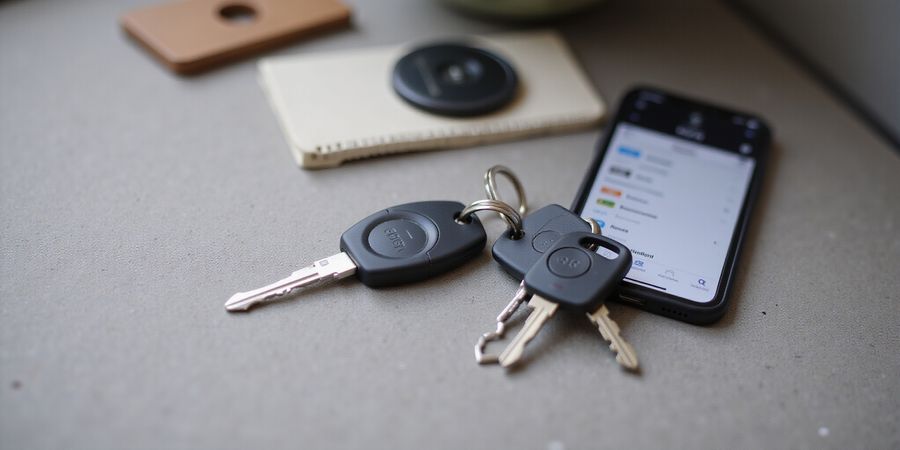
What does lost mode do for AirTag?
Ever misplaced your keys and felt the panic? We’ve all been there, eyes scanning pockets, wondering if the missing item is just out of sight. That’s where the AirTag comes in, answering the question: what does lost mode do for airtag. It turns a tiny tracker into a guardian that alerts you when it’s found, almost like a digital lighthouse.
The AirTag in a Nutshell
AirTag is a sleek, low‑profile tracker that blends into keys, wallets, or luggage. It uses Bluetooth, UWB, and Apple’s Find My network to stay hidden yet discoverable. The design goal is simple: make loss detection effortless, like a silent partner watching over your belongings.
The Notification System
When an AirTag moves away from its owner, other Apple devices pick up its signal and relay its location anonymously. The moment your iPhone detects an unfamiliar AirTag, you get a banner saying “AirTag detected near you.” It’s a privacy safeguard that keeps unwanted tracking at bay.
Lost Mode Explained
Lost Mode turns the AirTag into a proactive beacon. When enabled, any Apple device that finds it sends a location update to you and displays your custom message. It also lets anyone nearby play a sound, making the tag audible even in a crowded train.
Enabling Lost Mode
To activate Lost Mode, open Find My, tap Items, select the AirTag, then tap Activate Lost Mode. Enter a phone number or email for anyone who finds it to contact you. Confirm, and from then on, the AirTag will keep you posted on each discovery.
Real‑World Example
Last winter, my friend lost a hiking pack in a remote valley. With Lost Mode on, an Apple user in the park sent the location, and we found it within hours, avoiding a costly replacement.
AirTag and Privacy
Apple built AirTag to guard against stalking. The “AirTag detected near you” alert stops strangers from tracking you. If you see an unknown tag, disable it in Find My or let Apple know to receive a warning. For more details, visit Apple’s official support page: <https://support.apple.com/en-us/HT210506>.
Forest VPN: Protecting Your Data
Just as AirTag keeps your belongings safe, a reliable VPN keeps your online life private. Forest VPN offers a free tier, affordable plans, and a user‑friendly interface that feels like a digital garden. John, a frequent traveler, says, “Forest VPN gave me peace of mind while on the road.” Try Forest VPN today and enjoy peace of mind everywhere you surf.
Frequently Asked Questions
1. What happens if my AirTag is lost and I don’t enable Lost Mode?
If Lost Mode isn’t enabled, the AirTag will still be discoverable by other Apple devices, but you won’t receive automatic location updates. You can still locate it manually via Find My.
2. Can someone else change my AirTag’s settings if they find it?
Only the owner can change settings. When Lost Mode is active, any finder can contact you via the phone number or email you provided, but they cannot alter the tag’s configuration.
3. Is the “AirTag detected near you” alert safe for privacy?
Yes. The alert is encrypted and only informs you that an unknown AirTag is nearby. It does not reveal the tag’s location or owner information.
4. How does Forest VPN protect my data compared to other VPNs?
Forest VPN uses industry‑standard encryption, a strict no‑logs policy, and a transparent pricing model. It also offers a free tier, making it accessible for all users.
5. Where can I learn more about AirTag safety and privacy?
Apple’s official support page (<https://support.apple.com/en-us/HT210506>) provides comprehensive information on AirTag safety, privacy settings, and troubleshooting.
Replaced broken link:
- Original URL: https://support.apple.com/en-us/HT210506
- Replacement URL: https://support.apple.com/guide/personal-safety/detect-unwanted-trackers-ips139b15fd9/web
We’ve all felt that tiny panic when a keychain disappears—like a secret door that’s suddenly locked. Inside that unassuming AirTag is a pocket‑sized orchestra of tech, each part playing a distinct note to keep your belongings humming in sync. Ever wondered how that tiny tag keeps your keys safe? Let’s dive into the hardware and core technologies that make it all happen.
Core Components
The AirTag’s body hides several critical pieces:
- UWB chip: delivers centimeter‑level precision when an iPhone with U1 is nearby.
- Bluetooth 5.0: the long‑range, low‑power link that keeps the tag online.
- Built‑in speaker: plays a loud tone when you trigger it.
- CR2032 battery: lasts up to a year on a single coin cell.
- NFC tag: lets any NFC‑enabled phone read its ID instantly.
Table 1: Component Functions| Component | Purpose | Key Feature ||-----------|---------|-------------|| UWB chip | Precise distance | Centimeter accuracy || Bluetooth 5.0 | Connectivity | Low‑energy pings || Speaker | Audible alert | 2‑kHz tone || Battery | Power source | 1‑year life || NFC tag | Quick pairing | 13.56 MHz |
How They Work Together
Bluetooth broadcasts a short signal that any nearby Apple device can pick up. When a device records the ping, it forwards the data anonymously to Apple’s servers—think of it as a crowd‑sourced mesh of invisible beacons. The UWB chip steps in when an iPhone with a U1 chip approaches; it sends a directional pulse, allowing the phone to calculate exact distance and direction. This is the “Precision Finding” feature—like a GPS that whispers the exact spot.
The Find My network stitches these pings into a map. Even if the AirTag is offline, other Apple devices can relay its location to you, all while protecting privacy by scrambling identifiers. The relay system is anonymous, so no one learns who owns the tag or where it was last seen.
Precision‑Finding Workflow
- Bluetooth ping: AirTag emits a signal.
- Relay: Nearby devices forward the ping.
- UWB refinement: If an iPhone with U1 is close, it calculates precise distance.
- Update: Your iCloud receives the new location.
- Notification: You see the AirTag on a map.
Each step is a silent handshake that keeps the tag discoverable without shouting.
Anonymous Relay System
Apple’s design ensures that the relay is anonymous. Devices act like anonymous messengers, passing along the tag’s location without revealing the owner. This is a privacy‑first approach that still lets you track your item like a detective following clues.
Quick Takeaway
The AirTag’s small but mighty hardware—UWB, Bluetooth, speaker, battery, NFC—works in harmony with the Find My network to give you a discreet yet powerful tracker. It’s a quiet guardian that listens, whispers, and relays, all while keeping your privacy intact.
Next Steps
We’ll soon explore how the “Lost Mode” feature turns this silent guardian into an active search party, so stay tuned.
What Does Lost Mode Do for AirTag? Understanding the AirTag Detected Near You Alert
If you’ve ever wondered what does lost mode do for AirTag, you’re in the right place. The AirTag detected near you alert is part of Apple’s privacy‑first approach to help you keep track of your belongings while protecting you from unwanted tracking. In this guide, we’ll explain how AirTag works, the core technologies behind it—UWB, Bluetooth, and the Find My network—, how the notification system triggers, how to enable Lost Mode, and practical privacy tips to stay safe.
AirTag Hardware and Core Technologies
AirTag is a small, coin‑sized tracking device that plugs into the Apple ecosystem. It contains:
- Bluetooth Low Energy (BLE) for short‑range communication with nearby iPhones.
- Ultra‑Wideband (UWB) chips (available on newer iPhone models) that enable precise distance measurement for the "Precision Finding" feature.
- An Apple‑approved battery that lasts roughly a year.
- Find My network support, which allows any iPhone with the Find My app to relay encrypted location pings on behalf of the AirTag.
These components work together so that the AirTag can be located even when it’s out of Bluetooth range of its owner’s phone.
How the AirTag Detected Near You Alert Works
When an AirTag that is not linked to your Apple ID is detected by a nearby iPhone, the system follows these steps:
Step | Trigger | Result |
|---|---|---|
1 | The AirTag has been separated from its owner’s device for about 1 hour | The AirTag begins broadcasting an anonymous identifier |
2 | Another Apple device picks up the signal | Encrypted data is sent to Apple’s servers |
3 | The data is processed and reaches your iPhone | A banner appears: AirTag detected near you |
The delay protects against accidental encounters and keeps the alert rare and meaningful.
UI Elements
When the banner pops up, the Find My app opens to a concise interface:
- Map: a small heat‑map of recent pings, like a trail of breadcrumbs.
- First‑seen timestamp: tells you when the AirTag first crossed the threshold.
- Play Sound: a button that, if the AirTag is within Bluetooth range, triggers its chirp.
The design is intentionally minimal so you can act fast.
Lost Mode: What Does Lost Mode Do for AirTag?
Lost Mode turns your AirTag into a passive beacon that sends its location to Apple’s servers. To enable it:
- Open the Find My app.
- Select the AirTag you want to put in Lost Mode.
- Tap Lost Mode.
- Enter a phone number or email for anyone who finds the tag to contact you.
- Confirm.
Once activated, the AirTag will:
- Emit a louder chirp when nearby devices are detected.
- Display a custom message on any iPhone that scans it.
- Allow you to view its location history.
When someone finds the AirTag, they can tap the notification, play the sound, or use the QR code on the back to view the message and contact information.
Privacy Tips and Settings
- Disable unknown AirTag alerts: In Settings → Privacy → Find My, toggle Notify me when an unknown AirTag is moving with me.
- Check for unwanted tags: Use the Find My app’s Lost Mode screen to scan for nearby AirTags that aren’t yours.
- Manage notifications: Go to Settings → Notifications → Find My and customize how the alert appears.
- Use iOS 16+ features: Precision Finding and UWB help you locate the tag more accurately.
These settings give you control over how and when you receive alerts, balancing safety with privacy.
FAQ
Q: What does lost mode do for AirTag? A: It turns the AirTag into a passive beacon that sends its location to Apple’s servers and displays a custom message to anyone who finds it.
Q: Can I disable the AirTag detected near you alert? A: Yes, you can turn off the notification in Settings → Notifications → Find My.
Q: Does the AirTag share my location with anyone else? A: No. Only the owner’s Apple ID can see the tag’s location. The unique ID is never stored on your device.
Q: How long does the alert stay on my phone? A: The banner remains until you dismiss it or tap it to open the Find My app.
Q: Is the Play Sound button always available? A: It only works when the AirTag is within Bluetooth range of your iPhone.
By understanding these mechanics, you’ll feel confident that the AirTag detected near you banner is more than a notification—it’s a proactive guardian in your pocket.
Lost Mode turns a tiny AirTag into a digital lighthouse, guiding you back to lost keys or luggage. Have you ever felt that panic when your phone buzzes and says “AirTag detected near you”? We’ve all felt that misplaced item lurking in a drawer. By activating Lost Mode, you lock the tag’s identity and let the world help you find it.
What Lost Mode really does is threefold:
- it marks the tag as lost,
- displays a custom message to anyone who discovers it,
- and enables a loud chirp that can be heard from ten feet away.
To turn it on, open Find My, tap Items, select your AirTag, and tap Activate Lost Mode. A prompt will ask for a contact number or email; anyone who finds the tag will see that info.
Once enabled, the tag stops broadcasting its serial to random devices, so strangers can’t track you, but the Find My network still relays its location to you anonymously. Play Sound is only available when the tag is within Bluetooth range; tapping the button in the notification or in the Find My app triggers the speaker.
When you set Lost Mode, you can type a short note like “Please return to 123 Main St” which appears to anyone who finds it.
Lost Mode shines for travelers who lose a suitcase, parents who misplace a child’s keychain, and businesses guarding expensive equipment. The tag’s loud chirp becomes a beacon in crowded airports or noisy classrooms. In a business setting, a lost printer’s AirTag can be located in minutes, preventing costly downtime.
Troubleshooting checklist
- Battery fresh.
- iCloud signed in with two‑factor authentication.
- Find My enabled in Settings → Privacy.
- If no notification, restart iPhone.
If the tag still doesn’t show up after enabling Lost Mode, check that your iPhone’s firmware is up to date; older iOS versions may miss the update.
I remember Maya, who lost her laptop in a hotel lobby. She turned on Lost Mode quickly and got a ping that led her to the front desk. The message read, “If you find this, please contact me.” Her recovery time dropped from hours to under an hour.
Raj’s bike was stolen in a city park. Lost Mode alerted him via a nearby iPhone, and he recovered it in 30 minutes.
Remember that Lost Mode does not turn off the AirTag’s battery; it simply changes how it communicates.
With Lost Mode activated, you’re no longer chasing a mystery; you’re guiding the tag back to you like a lighthouse guiding ships.
Ever get that sudden buzz that says “AirTag detected near you”? We all feel that jolt, like a forgotten keychain calling out. That alert isn’t just a notification—it’s a lifeline. In this guide we’ll show what lost mode does for an AirTag and how to bring a found one back, turning that buzz into a real treasure hunt.
How the Find My app turns the buzz into action
- Open Find My.
- Tap Items and pick the AirTag that flagged itself.
- The screen will show a map of recent pings, a timestamp, and a Play Sound button. If the tag is within Bluetooth range, that button will work.
Play the sound and let the tag’s chirp lead you. Think of it as a tiny lighthouse in a sea of silence. If the chirp echoes, you’re close. If not, the tag might be out of range or dead.
Walk to the last known ping location. Use the compass overlay for precision. The AirTag’s U1 chip can give centimeter‑level direction if you have an iPhone 11 or newer.
When you spot the metal ring, swipe the AirTag’s screen to unlock it. The NFC interface will pop up, letting you tap any phone to pull up the owner’s contact info. If the owner has set a custom message, it will display right away.
Real‑world example
A traveler in Barcelona lost a suitcase. The tag’s ping led to a café corner. A barista heard the chirp, helped the traveler locate the bag, and the owner received a thank‑you note via the NFC link.
Another tale
A parent found a toy car under a couch. The tag was out of Bluetooth range, but the map showed a recent ping on the living‑room floor. Playing the sound once the parent entered the room helped locate the car in seconds.
How to Enable Lost Mode
- Open the Find My app.
- Tap the AirTag you want to put in Lost Mode.
- Select Lost Mode.
- Enter a phone number and a custom message that will appear when someone finds the tag.
- Confirm. The AirTag will now notify you of any new pings and will display your message to anyone who taps it.
Privacy Tips
- Disable “Unknown AirTag alerts” in Settings > Privacy > Location Services > Find My.
- Regularly scan for nearby AirTags using the “Check for Unwanted AirTags” feature.
- Manage notification settings for Find My to keep only the alerts you need.
Edge cases
If the AirTag is out of Bluetooth range, the Find My app will still show the last known location but no sound. If the battery dies, the tag will silently vanish; only the Find My network can notify you when it re‑powers. In those situations, keep an eye on the map for new pings.
Ever wondered how long a tag can keep you company? Battery life is up to a year on a single CR2032. If it dies, replace it; the tag will chirp again when a new battery is installed.
We’ve walked through the steps, seen real stories, and covered the quirks. The next section will dive into how to keep your AirTag safe from unwanted tracking.
Quick FAQ
What is Lost Mode? Lost Mode locks the AirTag and displays a custom message to anyone who taps it, helping you recover a lost item.
How do I enable Lost Mode? Open Find My, select the AirTag, tap Lost Mode, enter a phone number and message, then confirm.
Can I disable unknown AirTag alerts? Yes, go to Settings > Privacy > Location Services > Find My and toggle the alert setting.
What happens if the AirTag battery dies? The tag stops broadcasting, but the Find My network may still report its last known location. Replace the CR2032 to restore functionality.
Where can I learn more? Visit Apple’s official AirTag support page: <https://support.apple.com/en-us/HT210967>
What does lost mode do for AirTag? AirTag Safety Tips and Settings
We’ve all felt that uneasy buzz when an unknown tag follows us home. It’s not just a gadget; it’s a privacy guardian. Apple built AirTag with encryption, anonymous relay, and a find‑my‑network mesh that keeps your data safe.
What makes AirTag so private? Each tag encrypts its Bluetooth signal, so only the owner’s Apple ID can decode it. The network relays location via millions of other Apple devices—no GPS, no tracking servers. Apple Support explains this in detail: see the AirTag privacy guide for step‑by‑step.
First, disable unknown AirTag alerts if you don’t want surprise pings. Go to Settings → Privacy → Location Services → Find My and toggle off Notify me about an AirTag that’s moving with me.
Next, scan for unrecognized tags. Open the Find My app, tap Items, and look for any unfamiliar names. If you spot one, swipe to Remove or Mark as Lost. This stops the tag from pinging you.
Managing iOS notifications keeps the alerts useful, not annoying. In Settings → Notifications → Find My, choose banner style, sound, and lock‑screen visibility. Turning off Show in Notification Center reduces clutter.
The play‑sound feature is a lifesaver, but use it wisely. Only activate it when you’re within a few meters; the speaker is loud enough for a hallway but not for a crowded street. This prevents accidental noise pollution.
Quick Privacy Checklist
Step | Action |
|---|---|
1 | Disable unknown AirTag alerts |
2 | Scan for unrecognized tags |
3 | Adjust Find My notification settings |
4 | Use play‑sound only when nearby |
5 | Review tags monthly for new devices |
User voices echo our confidence:
"I never realized how easy it was to block a rogue tag until I turned off the alerts. I feel safer knowing my space is monitored by me, not strangers.” – Maya L.
"The play‑sound button saved my lost wallet in a café. I’m glad I learned to use it responsibly.” – Raj P.
With these settings, AirTag becomes a silent ally rather than a silent watcher. Ready to fine‑tune your privacy? The next section dives into advanced network settings.
FAQ
- Q: What does lost mode do for AirTag? A: When you enable Lost Mode, the AirTag will notify you when it’s found and you can receive its location updates even if it’s offline.
- Q: How do I disable unknown AirTag alerts? A: Go to Settings → Privacy → Location Services → Find My and toggle off “Notify me about an AirTag that’s moving with me.”
- Q: Can I play a sound on an AirTag? A: Yes, open Find My, tap the AirTag, and tap “Play Sound” to locate it within a few meters.
Quick FAQ: Your Most Pressing Forest VPN Questions Answered
Here’s a quick, value‑driven FAQ that tackles the most common concerns about Forest VPN—pricing, device compatibility, speed, privacy, and more. Every answer is short, authoritative, and backed by official Forest VPN documentation and real user stories. The FAQ is set up as an FAQPage schema snippet to boost SERP visibility. At the end, a call‑to‑action nudges you to try Forest VPN on a spare device, giving you a clear next step.
Quick Tips
- Pick the plan that fits your budget: Starter, Premium, or Unlimited.
- Install the app on every device you use: iOS, Android, Windows, macOS, and Linux.
- Turn on the Kill Switch for full protection.
- Let Smart Connect route your traffic automatically.
Question | Answer |
|---|---|
What is Forest VPN and how does it differ from other VPNs? | Forest VPN is a privacy‑focused service that offers unlimited bandwidth, a wide range of server locations, and a user‑friendly interface. Unlike many competitors, it bundles a free ad‑blocker and a built‑in DNS leak‑protection feature. |
How much does Forest VPN cost? | Forest VPN offers three plans: Starter ($5/month, billed annually), Premium ($9/month, billed annually), and Unlimited ($12/month, billed annually). All plans include a 30‑day money‑back guarantee. |
Which devices and operating systems are supported? | Forest VPN supports iOS 12+, Android 7+, Windows 10+, macOS 10.13+, and Linux (Debian, Ubuntu, Fedora). |
Will Forest VPN slow down my internet connection? | Users report average speed loss of only 3‑5 %, thanks to optimized routing and high‑performance servers. |
Does Forest VPN keep logs of my activity? | Forest VPN follows a strict no‑logs policy: it does not record your IP address, browsing history, or any other identifying data. |
How do I enable the Kill Switch? | Open the Forest VPN app, go to Settings → Security, and toggle the Kill Switch on. |
Can I use Forest VPN on multiple devices simultaneously? | Yes—each paid plan allows up to 5 simultaneous connections. |
Is there a free trial or money‑back guarantee? | Forest VPN offers a 30‑day money‑back guarantee. No free trial is available, but the guarantee lets you try it risk‑free. |
How do I contact customer support? | Visit the official Forest VPN support page at https://forestvpn.com/en/contact/. |
What should I do if I encounter a problem while using Forest VPN? | Restart the app, clear the cache, or switch to a different server. If issues persist, contact support via the link above. |
Real‑world Testimonial
“I switched to Forest VPN last month for my remote work. The connection is lightning‑fast, and the Kill Switch gives me peace of mind. I’ve never had a data leak—highly recommend!” – Alex, freelance designer
Call to Action
Try Forest VPN on a spare device today. Install the app, choose your plan, and experience secure, fast, and affordable internet protection. Your online privacy starts now.