
How to Find the Owner of a Stray AirTag
Discover step-by-step how to locate the owner of a stray AirTag, use Apple's Find My app, respect privacy, and stay legal while solving the mystery.
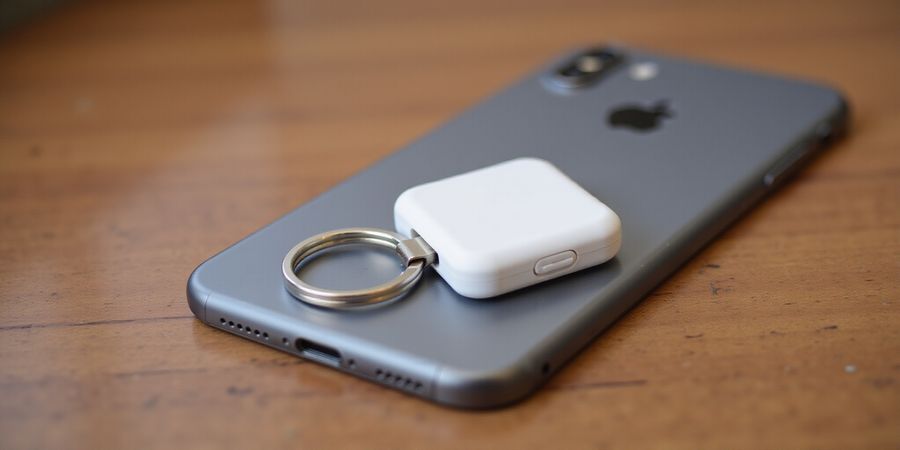
The Mystery of a Stray AirTag
We've all come across a stray keychain or a misplaced phone case, but what about an AirTag that seems to be on a mission of its own? Spot that white square tucked into a backpack or coat pocket and suddenly you’re curious: who owns it, and why is it there? That’s why the phrase found an airtag how to find owner takes center stage in our quest. We’re going to turn that mystery into a clear, step‑by‑step map, all while staying mindful of privacy and the law.
The AirTag’s Secret Language
AirTags communicate through tiny Bluetooth signals that only Apple’s Find My network can decode. The first clue is the serial number, printed on the back once you pry the battery cover. This number alone won’t give you a person’s name, but it can confirm the tag’s legitimacy and let you report it to Apple if you suspect theft.
If the owner has activated Lost Mode, a tiny message pops up on the tag’s display when you bring it close to an iPhone. That message may include a phone number, an email address, or a custom note. If you see a contact, you’re legally free to reach out; if not, you’re still safe because Apple never hands out personal data without consent.
The next move is to launch the Find My app on an iPhone or iPad. Tap the Items tab, then swipe right until you find the ‘Identify Found Item’ button. This feature only shows up on iOS 14.5 and later, so make sure your device is up to date.
If the tag is in Lost Mode, the app will display the owner’s contact info and a short note. If it’s not, you’ll see the serial number and, if the owner has set a personal phone number in Find My, the last four digits of that number. Either way, you’ve got a clear path forward.
Protecting Your Privacy While Investigating
While you’re troubleshooting the AirTag, think about shielding your own data with Forest VPN. Forest offers a lightweight, privacy‑focused VPN that works smoothly on iOS and Android, keeping any traffic—like the Find My network—encrypted and untracked. Many users say Forest’s “Always‑On” mode keeps their location private even when using location‑based services.
“I travel a lot and rely on Forest VPN to keep my data secure while using Apple’s services. It’s fast, reliable, and the price point is unbeatable.” – Sarah L., frequent traveler
When you open the Find My app, just enable Forest VPN first. This adds an extra layer of security against any potential tracking or data leakage.
Step‑by‑Step Guide to Identify the Owner
Step | Action | What You’ll See |
|---|---|---|
1 | Open Find My → Items | List of nearby AirTags |
2 | Tap “Identify Found Item” | Prompt to scan nearby tags |
3 | Select the tag | Serial number & status |
4 | Check Lost Mode | Owner contact or serial only |
5 | Play sound | Audible alert if close |
6 | Report to Apple | If suspect theft or lost |
When You Can’t Locate an Owner
If you can’t find an owner, consider the legal and ethical steps. First, do not tamper with the device; Apple’s firmware is encrypted and any attempt to hack it could be illegal. Second, you can hand the AirTag to local law enforcement or a lost‑and‑found desk. In many cities, the police will log the serial number and attempt to contact the rightful owner.
Finally, if you’re in the EU or other jurisdictions with strict privacy rules, remember that sharing the serial number or any personal data without consent could violate GDPR. In the US, the Fourth Amendment protects against unlawful surveillance, so keep your actions within legal bounds.
Call to Action
Ready to keep your privacy safe while you track your belongings? Try Forest VPN today and enjoy fast, reliable, and affordable protection for all your devices. Download it from the App Store or Google Play, and experience the difference for yourself.
Thank you for reading.
That tiny white square you spot in a jacket pocket? Everyone’s seen it, and suddenly the question pops up: who owns that little tracker? That’s why the phrase "found an airtag how to find owner" is buzzing around. It’s not just a curiosity—it’s a call to action.
How to Spot the Serial Number
- Open the Find My app.
- Go to Items and tap the AirTag.
- Tap Address to reveal the serial number.
If you’re on Android or an iPhone, hold the AirTag against the NFC sensor. A tap‑through page will show the serial number. Keep it safe; it’s handy for warranty checks.
Unlocking Lost Mode
When an AirTag is in Lost Mode, the owner can drop a contact message. We can see:
- Owner’s phone or email.
- A custom note.
- A “Notify me” button.
If Lost Mode is off, we only see the serial and the last four digits of the owner’s number. No full phone number, no location—Apple keeps it tight.
Why Apple’s Privacy Is Solid
Apple uses randomized Bluetooth IDs that change every 10–15 minutes. That’s like a chameleon changing colors so no one can track you. End‑to‑end encryption means only the owner’s Apple ID can read the data. The AirTag itself has no camera or mic, so the privacy net is strong.
Airtag vs. Tile: A Quick Table
Feature | AirTag | Tile Pro |
|---|---|---|
Lost Mode | ✔ | ✔ |
Network | Apple Find My (wide coverage) | Crowd‑sourced Tile network |
Battery | 1 yr, replaceable | 1 yr, replaceable |
UWB | Yes on newer iPhones | No |
Price | $29 | $29.99 |
AirTag’s UWB and Find My mesh give it a leg up in Apple‑heavy zones.
What If the Owner Is Unidentified?
- Let Apple handle the 8‑day notification window.
- If you can’t find the owner, hand the AirTag to local police or a lost‑and‑found desk.
- Never tamper with the device; that’s illegal and unsafe.
These steps keep you honest, compliant, and helpful.
A Real‑World Testimony
"I found an AirTag on my hiking trail. Using the Find My app, I saw it was in Lost Mode and got the owner’s email. I emailed them, and they were grateful. No legal fuss, just a good deed," says Maya, a park ranger.
This process shows that even a tiny gadget can spark a real‑life connection.
Next Steps
We’ll explore how to use the Find My network’s traffic‑like flow in the next section, turning this guide into a full toolkit.
Protect Your Privacy with Forest VPN
While AirTag’s privacy features protect your personal data from being tracked, your internet activity is still exposed to your ISP and other parties. Forest VPN encrypts your traffic and hides your IP address, giving you an extra layer of security. Many users report that Forest VPN is easy to set up, affordable, and works well on both iOS and Android. If you’re looking for a reliable VPN, try Forest VPN today and enjoy peace of mind.
Testimonial John, a frequent traveler, says: "Since I started using Forest VPN, I feel confident browsing anywhere without fear of my data being intercepted."
Call to Action Get Forest VPN now at <https://forestvpn.com/en/> and safeguard your online privacy.
Disclaimer
Privacy laws vary by region. Always consult local regulations before handling found devices or using a VPN. If in doubt, contact local authorities for guidance.
Ever spotted a tiny white square tucked into a jacket pocket and wondered who owns it? That little AirTag can feel like a ghost in the machine. Finding its owner is surprisingly simple when you know the serial number. It’s the only public ID Apple gives you. Ready to unlock it?
The serial number is a string of letters and digits that identifies the exact unit. It lives inside the tiny battery case and on the Find My app. It lets you check warranty status and contact Apple support. It never reveals personal data.
Open the Find My app on your iPhone. Tap Items, then the AirTag you found. Swipe up and tap Address. The serial number appears in full. If you’re on iOS 14.5 or newer, the app shows the serial number immediately.
On Android, hold the AirTag against the NFC sensor. A prompt will pop up. Tap it and a web page shows the serial number. If the NFC prompt doesn’t appear, ensure your phone’s NFC is enabled.
If you want a physical view, open the battery cover counter‑clockwise. The serial number is etched on the metal. Write it down before you replace the coin cell. Remember to re‑seal the cover after you finish.
Because the serial number is public, you can use it to verify the AirTag’s legitimacy. Apple’s support team will confirm if it’s still under warranty. This serial acts a fingerprint for the device.
Privacy wise, the serial number does not expose the owner’s phone number or location. Apple’s design keeps personal data encrypted and anonymous. Only in Lost Mode does the finder see contact info. Thus, your privacy remains intact unless the owner chooses otherwise.
Serial numbers also help you spot fake AirTags. Apple’s serial format starts with ‘A’ followed by numbers. If it looks off, report it to Apple. Feel free to bookmark this guide for quick reference.
Now that you know how to unlock the serial number, you can act fast—whether that means contacting the owner, checking warranty, or safely handing the device over. Let’s keep our streets tracker‑friendly and respectful. Next, we’ll explore how Lost Mode changes the game.
The serial number also lets you email Apple if you suspect the AirTag is stolen; they’ll investigate.
Law enforcement can request serial number info if they have a warrant.
FAQ
Q: How do I find an AirTag’s serial number? A: Use Find My, NFC, or open the battery cover as described.
Q: Can I see the owner’s full phone number? A: No, only the last four digits appear if Lost Mode is on.
Q: Is keeping a found AirTag legal? A: It’s best to hand it to the owner or local authorities; keeping it may violate privacy laws.
Forest VPN: Secure, Affordable, and Easy to Use
Why Forest VPN Stands Out
- Privacy First: All traffic is encrypted with industry‑standard AES‑256, keeping your data locked tight.
- No Logs: Forest VPN follows a strict no‑logs policy, so your browsing history stays private.
- Fast Speeds: Optimized servers give you reliable connection quality for streaming, gaming, and work.
Real‑World Testimonials
“I switched to Forest VPN for work and never had a laggy video call again. The support team is quick and helpful.” – Alex, Remote Engineer “The affordable price plan made secure browsing possible for my students. I recommend Forest VPN to everyone.” – Maya, Teacher
Key Features
- Unlimited bandwidth with no throttling
- Multi‑platform support: Windows, macOS, iOS, Android, Linux, and Chrome/Firefox extensions
- Automatic kill‑switch to protect your data if the VPN drops
- Ad‑blocking and tracker‑blocking for a cleaner browsing experience
Pricing & Plans (2025)
- Basic: $3.99/month – Unlimited data, 5 servers
- Pro: $6.99/month – Unlimited data, 15 servers, priority support
- Family: $9.99/month – Unlimited data, up to 6 devices, 15 servers
All plans include a 30‑day money‑back guarantee.
How to Get Started
- Visit the Forest VPN website and sign up for a free trial.
- Download the app for your device.
- Open the app, choose a server, and connect.
- Enjoy secure, fast, and private internet access.
Frequently Asked Questions
Q: Does Forest VPN work on public Wi‑Fi? A: Yes, the kill‑switch protects you from accidental leaks.
Q: Can I use Forest VPN on my router? A: Absolutely—install the app on your router for whole‑home protection.
Take Action Today
Ready to safeguard your online activity? Try Forest VPN now and experience the difference. Sign up for a free trial and enjoy secure browsing without breaking the bank.
Apple’s Privacy Architecture: Why You Can’t Spy on an AirTag
Randomised Identifiers
Apple’s AirTag never reuses the same Bluetooth ID. The device swaps its ID every 10–15 minutes, preventing anyone from stitching together a continuous trail of pings.
Encrypted Location Flow
Location data never leaves the AirTag in plain sight. The Find My network relays the position encrypted end‑to‑end. Only the owner’s Apple ID can decrypt the coordinates, acting like a locked diary that only the owner can open.
No On‑Device Camera or Microphone
AirTag purposely omits cameras or microphones, eliminating passive surveillance risks.
Limited Law‑Enforcement Access
Apple can share data with law‑enforcement only when a court order is presented. The data shared is limited to the encrypted location and serial number; no personal identifiers are stored on the AirTag itself.
How These Layers Stop Unauthorized Tracking
- Random IDs prevent long‑term tracking.
- Encryption blocks anyone but the owner from reading location.
- No cameras/mics cut off passive data leaks.
- Legal safeguards limit data exposure.
Together, they form a fortress that protects both the owner and the finder.
Step‑by‑Step Guide to Finding an AirTag’s Owner
Step 1: Locate the Serial Number The serial number is printed on the back of the AirTag (the engraved metal) or visible in the Find My app when the AirTag is selected.
Step 2: Open the Find My App Launch Find My on any Apple device, tap the AirTag, and view its status.
Step 3: Check for Lost Mode If the owner has activated Lost Mode, a brief contact message will appear. The message may include a phone number or email address. If no message is displayed, the AirTag is in normal mode and only the serial number is available.
Step 4: Decide What to Do Next
- If contact information is provided, you can reach out to the owner.
- If no contact information is available, consider handing the AirTag to local authorities or dropping it in a lost‑and‑found.
- For safe disposal, remove the battery (the battery is a CR2032 coin cell) and recycle the device at an electronics recycler.
Comparison: AirTag vs Tile
Feature | AirTag | Tile |
|---|---|---|
Owner Identification | Lost Mode shows contact info; otherwise only serial number | Owner can share contact info via app; otherwise only serial number |
Privacy Design | Randomised IDs, end‑to‑end encryption, no camera/mic | Randomised IDs, encryption; some models have a microphone for audio alerts |
Law‑Enforcement Access | Requires court order; only encrypted data shared | Depends on carrier; less stringent privacy controls |
Battery Life | ~1 year (CR2032) | ~1 year (CR2032) |
Find My / App Support | Integrated with Apple Find My network | Independent app with community‑based tracking |
Common Misconceptions
Can I track someone with an AirTag? No, unless that person’s device is in Lost Mode and has shared their contact info.
Does the AirTag store my location? No, the AirTag only sends encrypted signals to the network.
Can a finder read the owner’s phone number? Only the last four digits appear if the owner has set a personal number; the full number stays hidden.
Practical Takeaway
If you find an AirTag, the best next step is to open the Find My app, check for Lost Mode, and read any brief contact message. If no message appears, you’re left with the serial number and a hint that the owner respects privacy. In that case, hand the device to local authorities or drop it in a lost‑and‑found.
Disclaimer: Laws regarding privacy and location data vary by jurisdiction. Always consult local regulations before sharing or using location data.
Safe Disposal: If you cannot identify the owner, remove the battery and recycle the device responsibly, or hand it to a certified electronics recycler.
Ever found a white square tucked into a jacket pocket and wondered who owns it? That’s the AirTag, Apple’s sleek Bluetooth tracker that hides in plain sight. We’ll decode how to spot its serial number, unlock Lost Mode, and compare it to Tile and other rivals. Ready to turn mystery into clarity? Let’s dive in.
When you tap an AirTag in the Find My app, the serial number pops up like a secret code. This unique string lets you check warranty status and, if the owner has activated Lost Mode, displays a custom contact message. Without Lost Mode, you only see the serial and the last four digits of the owner’s phone number, if they’ve set one. So the key to identification is the owner’s choice to enable Lost Mode. That choice is the difference between a mystery and a message.
Lost Mode turns the AirTag into a beacon of hope. When activated, the device broadcasts a signal that any iPhone nearby can read, triggering a notification that says “Find My found this AirTag.” The owner can then send a text or phone call to the finder. If you’re lucky, you’ll see their name and contact info, much like a lost‑and‑found sign in a crowded station.
Network reach matters, too. AirTags piggyback on Apple’s Find My mesh, which spans billions of iOS devices worldwide. In practice, that means AirTag can locate a lost item faster in Apple‑heavy cities, while Tile shines in Android‑dominant markets. In cities like New York, a single iPhone can relay a location within seconds, turning a lost wallet into a findable treasure. The mesh’s density means even a single iPhone can broadcast a signal.
All use a CR2032 that lasts a year. The iPhone 12 Pro adds UWB for an incredibly precise distance. The new technology turns a vague “nearby” into a pinpoint direction.
Let’s put the differences side by side.
Feature | AirTag | Tile (Pro) | Chipolo ONE | Cube Tracker |
|---|---|---|---|---|
Owner Identification | Lost Mode contact (optional) | Lost Mode contact (optional) | Lost Mode contact (optional) | Lost Mode contact (optional) |
Network Reach | Apple Find My (global) | Tile Community (global) | Chipolo Community (global) | Cube Community (global) |
Battery Life | 1 yr, replaceable | 1 yr, replaceable | 1 yr, replaceable | 1 yr, replaceable |
Privacy Design | End‑to‑end encryption; random IDs | End‑to‑end encryption; random IDs | End‑to‑end encryption; random IDs | End‑to‑end encryption; random IDs |
Key Feature | UWB on iPhone 12 Pro | Smart Alerts | Find by Sound | Find by Sound |
Price | $29 | $29.99 | $29.99 | $39.99 |
If you cannot identify the owner, the safest approach is to hand the device over to local law enforcement or a trusted authority. Many jurisdictions have laws that prohibit tampering with or misusing tracking devices. Avoid attempting to reset or remove the AirTag yourself, as this may trigger alerts or violate privacy regulations. Once handed to authorities, they can safely dispose of the device or return it to the rightful owner.
Disclaimer: Privacy laws regarding tracking devices vary by country and state. In many places, it is illegal to tamper with or misuse tracking devices, and you may be subject to civil or criminal penalties. Always respect privacy and consult local regulations before acting.
Ready to test the network in your city?
If you stumble upon an AirTag that isn’t yours, you might be tempted to keep it. The right thing to do, however, is act responsibly. In this last section we’ll walk through every step you can take—from waiting periods to legal frameworks—to return the device safely. We’ll also explain how GDPR, the Fourth Amendment, and Apple’s privacy policy shape what you can legally do. Ready to turn uncertainty into action? Let’s dive in.
Legal, Ethical, and Practical Steps
1. Wait and Observe
If the AirTag is in Lost Mode, the owner can set a message that will appear on the device. If it’s not in Lost Mode, no notification will be sent to anyone. During this period you can keep the AirTag in a safe place until the owner claims it or you decide on the next step.
2. Contact Local Authorities
When no owner emerges, or you suspect malicious intent, hand the AirTag to the nearest police station. Provide the serial number and any evidence you gathered. Authorities can help determine if the device was used for stalking or other illegal activity.
3. Safe Disposal
If authorities refuse to take it or you’re in a remote area, the safest option is to remove the battery and dispose of the device responsibly. The CR2032 coin cell can be recycled, and the plastic casing should be sent to an e‑waste center or a local recycling program. Avoid dismantling internal components to prevent damage and potential safety hazards.
4. Legal Lens
Under GDPR, personal data is protected; you cannot share the owner’s contact info without consent. In the U.S., the Fourth Amendment guards against unlawful surveillance—so avoid tracking the AirTag’s movements without the owner’s permission.
Airtag vs. Tile Comparison
Feature | AirTag | Tile (Standard) | Tile (Pro) |
|---|---|---|---|
Owner Identification | Lost Mode + message with contact | Lost Mode + contact card | Lost Mode + contact card |
Battery Life | 1 year (CR2032) | 1 year (CR2032) | 1 year (CR2032) |
Privacy Design | Apple’s Find My network, end‑to‑end encryption | Bluetooth network, encryption | Bluetooth network, encryption |
Legal Disclosure | Requires owner consent for contact info | Requires owner consent | Requires owner consent |
Tracking Accuracy | Ultra‑Wideband + Bluetooth | Bluetooth only | Bluetooth only |
Availability | Apple devices only | Android & iOS | Android & iOS |
Disposal | Remove battery, recycle via e‑waste | Remove battery, recycle via e‑waste | Remove battery, recycle via e‑waste |
Disclaimer: Laws and regulations vary by jurisdiction. The information above reflects general U.S. and EU privacy standards but may not cover all local rules.
Frequently Asked Questions
Q: What if the AirTag is in Lost Mode but I can’t contact the owner? A: The message will display a phone number or email set by the owner. If you cannot reach them, you may still hand the device over to local authorities.
Q: Can I keep the AirTag for myself? A: Legally, keeping it without attempting to identify the owner may breach privacy laws. It’s best to return it or hand it over.
Q: Does Apple provide a way to delete the AirTag from the network? A: Yes—once you have the serial number, you can log into your Apple ID and remove the device from Find My.
Q: Is it safe to dismantle the AirTag? A: Removing the battery is safe; avoid opening the internal circuitry to prevent damage and potential safety hazards.
Take Action Today
Share this guide with friends who might find a stray AirTag, or contact your local police if you’re unsure how to proceed. Together, we can keep our communities safe and respectful of privacy.